

About the survey
The annual Pollock Communications and Today’s Dietitian “What’s Trending in Nutrition” survey provides and in-depth look at trends by surveying Registered Dietition Nutritionists (RDNs) nationwide. It is the most comprehensive collection of data from nutrition experts actively working in the field.
Pollock Communications is a New York City-based, independent, full-service food and beverage, health, and wellness public relations agency. Pollock’s public relations and credentialed nutrition experts create innovative partnerships that link brands to health and wellness platforms. Pollock has a long history of reaching key influencers and successfully communicating the taste, health and lifestyle benefits of brands and commodity foods to consumers, retailers and healthcare professionals.
Today’s Dietitian is the leading independent source for news, information, research, and industry trends among the nation’s influential community of nutrition professionals. With each issue, Today’s Dietitian provides registered dietitians, certified diabetes care and education specialists, foodservice managers, and culinary professionals with well-written content on essential topics that affect their clients, their profession, and their career development. Today’s Dietitian is also a leading producer of accredited continuing education opportunities for these practitioners.
Media Contact:
Caitlin Neligan
cneligan@pollock-pr.com
LATEST TRENDS
Nutrition Trends for 2026 Show Gut Health, Clean Eating and Functional Foods Shaping Consumer Choices
Released March 2026
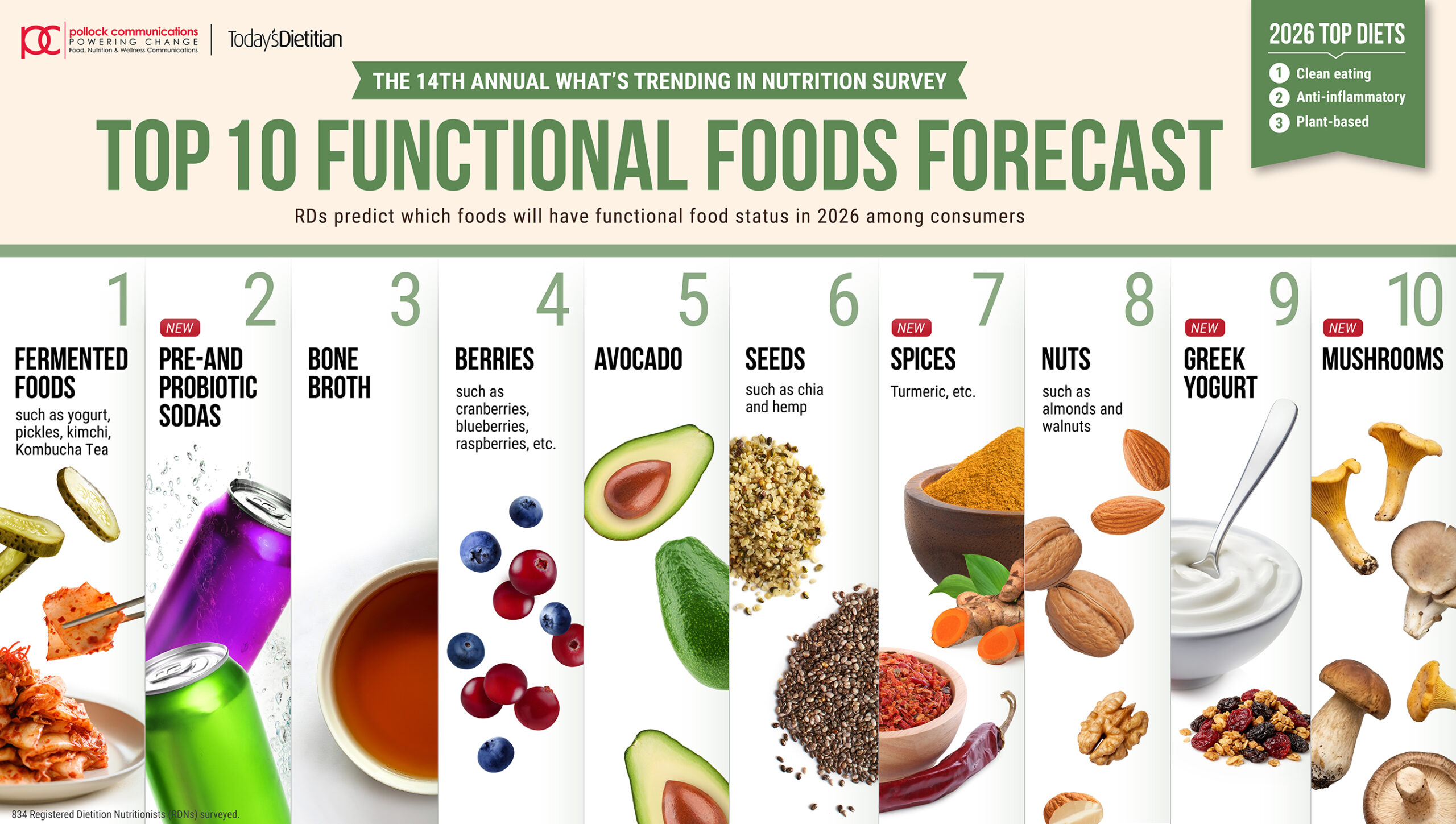
The 14th annual What’s Trending in Nutrition survey, conducted by Pollock Communications and Today’s Dietitian, reveals the top nutrition trends shaping consumer choices in 2026. Insights from 834 Registered Dietitian Nutritionists (RDNs) show a continued focus on gut-friendly and functional foods, clean eating, comfort and well-being and cost-conscious purchasing.
Fermented Foods, Better-for-You Sodas and Berries Lead 2026 Functional Foods
Fermented foods like pickles, kimchi and kombucha; bone broth; berries such as cranberries and blueberries; and avocado continue to lead the top functional foods list that RDNs predict consumers will view as having functional food status, particularly for gut health and overall wellness. New additions this year include pre- and probiotic sodas at #2, spices, Greek yogurt and mushrooms, reflecting growing consumer interest in innovative functional foods.
Top 10 Functional Foods Forecast 2026:
- Fermented foods such as yogurt, pickles, kimchi, kombucha tea
- Pre- and Probiotic Sodas – New!
- Bone Broth
- Berries such as cranberries, blueberries, raspberries, etc.
- Avocado
- Seeds, such as chia and hemp
- Spices – Turmeric, etc. – New!
- Nuts such as almonds and walnuts
- Greek Yogurt – New!
- Mushrooms – New!
Clean Eating Takes the Top Spot as Intermittent Fasting Drops Off the List
Clean eating is predicted to be the top eating pattern in 2026, moving up one from last year, while anti-inflammatory debuts at #2 and plant-based eating holds strong at the #3 spot. Notably, intermittent fasting, which ranked #1 in 2025 dropped off the list entirely, signaling a shift toward more balanced, whole-food approaches to eating.
Consumer Purchase Drivers: Value and Wellness Take Center Stage
Affordability remains a key factor in food purchasing decisions, with gut health continuing to rank among the top drivers. In 2026, comfort and emotional well-being replace immunity, reflecting a shift towards foods that support overall wellness and lifestyle.
2026 Top Purchase Drivers
- Affordability and value-based (34.59%)
- Comfort and emotional well-being (17.32%)
- Gut health support (14.90%)
Top 5 Attributes Consumers Look for When Making a Purchase
- Protein (17.94%)
- Brand Familiarity/ Trusted Brand (13.76%)
- Cultural or Family Preference (12.59%)
- Low Added Sugar (11.41%)
- Flavor Variety (8.15%)
When it comes to the attributes RDNs are looking for when making a purchase, they prioritize fiber, low added sugar and protein.
Protein: Top Priority, Ongoing Misconceptions
Despite protein being the top attribute driving consumer purchases, many consumers are still unsure how much they need daily. Common misconceptions include overestimating daily requirements and uncertainty about plant-based protein sources. RDNs report that protein intake, along with GLP-1s, continues to be one of the most frequently discussed topics with clients, highlighting ongoing interest and questions about how to meet protein needs effectively.
TikTok is the Leading Source of Nutrition Information and Misinformation
In 2026, TikTok has overtaken Instagram as the leading source of nutrition information. However, social media platforms also remain the top sources of misinformation, as consumers are increasingly relying on influencers, celebrities and people sharing personal experiences or success stories for dietary guidance.
RDNs note the biggest sources of misinformation include:
- TikTok (17.93%)
- Instagram (15.81%)
- Facebook (15.20%)
- YouTube (10.33%)
- Blogs/Vlogs (8.95%)
Innovation and Sustainability Lead the Way in Food Industry Trends
Cell-based products, plant-based products and sustainability initiatives are set to shape the food industry this year. After topping the list in 2025, AI has dropped out of the top three, highlighting a renewed focus on product innovation and environmental impact.
Supplements Are Meeting Nutritional Gaps and Supporting Health
The most recommended supplements by RDNs include multivitamins/minerals, vitamin D, prebiotics/probiotics/postbiotics followed by protein powders/shakes and calcium. Consumers are turning to supplements primarily to:
- Correct deficiencies (15.16%)
- Compensate for poor diet (14.06%)
- Manage health conditions (11.75%)
- Support aging (10.87%)
- Pregnancy/Lactation (9.11%)
Consumers and RDNs Pay More Attention to Oils
The type of oil used in food has become a more significant consideration for consumers. RDNs report that they “always” consider the type of oil used when making food choices, up from “often” last year.
Gen Z Emerges as Most Health-Conscious Generation
For the first time, Gen Z tops the list of health-conscious generations, followed by Baby Boomers and Gen X. Millennials, who led in 2025 have fallen off the list, signaling a shift in wellness priorities toward younger consumers.
Pre- and Probiotic Sodas: Skepticism Persists
While prebiotic and probiotic sodas have gained attention as functional beverages, a majority of RDNs view them as mostly marketing with little proven benefit. Some acknowledge potential benefits but consider the claims overhyped, reflecting cautious interest despite their inclusion as trending functional foods for this year.
Predicting Top Ingredients Consumers Will Look for This Year
According to RDNs, the following ingredients are predicted to be the ones consumers seek out most in 2026:
- Collagen (19.89%)
- Beef Tallow (17.76%)
- Adaptogens (9.56%)
- Apple cider vinegar (8.20%)
- Reishi mushrooms (7.88%)
Beef tallow and reishi mushrooms are new additions to the list this year, while CBD and monk fruit are no longer among the top trending ingredients.
Top 10 Nutrition Recommendations for 2026
RDNs continue to emphasize practical, everyday habits that support overall health. The top nutrition recommendations for consumers in 2026 based on this year’s survey include:
- Eat more servings of vegetables per day (15.32%)
- Increase fiber intake (13.21%)
- Limit highly processed foods or fast food (12.83%)
- Limit foods with “added sugars” (9.98%)
- Choose non-caloric drinks, like unsweetened tea or coffee (7.43%)
- Consider the full nutrient composition of a food when reading the Nutrition Facts Panel (4.99%)
- Eat more plant-based proteins (3.98%)
- Consume several small meals/snacks a day (3.63%)
- Keep a food journal (3.55%)
- Avoid refined grains (3.02%)
Keeping a food journal and avoiding refined grains are new additions to the top 10 this year, replacing recommendations to reduce saturated and trans-fat and reduce sodium consumption from last year.
See 2025 Trend Report
Gut Health, Affordability and Plant-Based Eating Predicted to Lead Consumer Choices in 2025
Released March 2025

The 13th annual What’s Trending in Nutrition survey, conducted by Pollock Communications and Today’s Dietitian, reveals the top nutrition trends shaping consumer choices in 2025. With insights from 874 Registered Dietitian Nutritionists (RDNs), the survey highlights a continued shift toward gut-friendly foods, plant-based eating, cost-conscious decision-making and more.
Fermented Foods and Berries Top the 2025 Superfoods List
Gut health remains a key focus for consumers, with fermented foods like yogurt, kimchi and kombucha ranking as the top superfoods for 2025. Also making waves this year and debuting on the list for 2025 are berries (such as cranberries, blueberries and raspberries), bone broth and leafy greens, reflecting interest in nutrient dense, functional foods.
Top 10 Superfoods of 2025:
- Fermented foods such as yogurt, pickles, kimchi, Kombucha Tea
- Berries such as cranberries, blueberries, raspberries, etc. – New!
- Bone broth – New!
- Seeds, such as chia and hemp
- Avocado
- Leafy greens such as kale, spinach – New!
- Nuts, like almonds and walnuts
- Ancient grains
- Green tea
- Pulses – dry peas, beans, lentils, chickpeas (garbanzo beans)
Plant-Based Diets Maintain Momentum While Keto Falls Out of Favor
Intermittent fasting continues to be the most popular diet trend, with clean eating breaking into the top three, replacing the ketogenic diet. Sustained interest in plant-based eating further solidifies the trend toward whole, minimally processed foods.
Consumer Purchase Drivers: Value and Wellness Take Center Stage
Affordability remains the number one driver of food purchases, reinforcing the importance of value-based shopping. Beyond cost, RDNs predict consumers will be seeking foods that support gut health, immunity and emotional well-being. Importantly, pantry staples moved into the top five purchase drivers, signaling a return to foundational, versatile ingredients.
2025 Top Purchase Drivers
- Food and beverages that are affordable and value-based (77%)
- Food and beverages that boost gut health (58.35%)
- Food and beverages that support immunity (45.42%)
- Food and beverages that promote comfort and emotional well-being (39.93%)
- Food and beverages that are pantry staples (25.51%)
When it comes to the attributes consumers are looking for when making a purchase, convenience, lower cost and taste all trump healthy.
Top 5 Attributes Consumers Look For When Making A Purchase
- Convenience (88.33%)
- Lower cost (84.67%)
- Taste (71.05%)
- Healthy (62.59%)
- “Natural” (50.92%)
Social Media: The Good, The Bad and The Misleading
For 2025, Instagram overtook TikTok as the leading source of nutrition information. However, these platforms are also the top sources of misinformation, as consumers increasingly rely on social media influencers, celebrities and friends for dietary guidance.
RDNs note the biggest sources of misinformation include:
- TikTok (85.93%)
- Instagram (75.51%)
- Facebook (72.65%)
- YouTube (50.11%)
- Blogs/Vlogs (46.45%)
Plant-Based Protein Myths Persist
Despite the popularity of plant-based diets, confusion still exists. The biggest misconception? Consumers remain unsure about which plant foods contain protein and whether they provide the same quality as animal-based sources. Dietitians stress the importance of education in helping people make informed choices.
AI Takes the Lead in Food Industry Innovation
For the first time, artificial intelligence was identified as the number one trend shaping changes in the food industry, surpassing health and immunity, which led in 2024. This highlights the growing role of technology in personalized nutrition and product development.
Supplements Are a Growing Focus for Health-Conscious Consumers
Dietitians are increasingly recommending supplements to address nutritional gaps. The top recommended supplements for 2025 include multivitamins, vitamin D, probiotics, protein powders and calcium. Consumers are also showing heightened interest in fiber, magnesium and electrolyte replacements, reinforcing the importance of holistic health and wellness support.
Growing Awareness of Oils, Snacking and Alcohol Consumption
The type of oil used in food has become a more significant consideration for consumers, aligning with choosing oils based on benefits to health and the environment. Snacking continues to be a major trend, with most consumers reaching for snacks two to three times per day. Additionally, alcohol consumption is shifting, with a strong desire among consumers to cut back, influenced by ongoing discussions about potential packaging warnings.